Every ECC customer has heard the pitch for all three roads to S/4HANA. What the decks underplay is that the right answer is determined less by your system landscape than by three uncomfortable questions about your organisation.
The three routes, honestly described
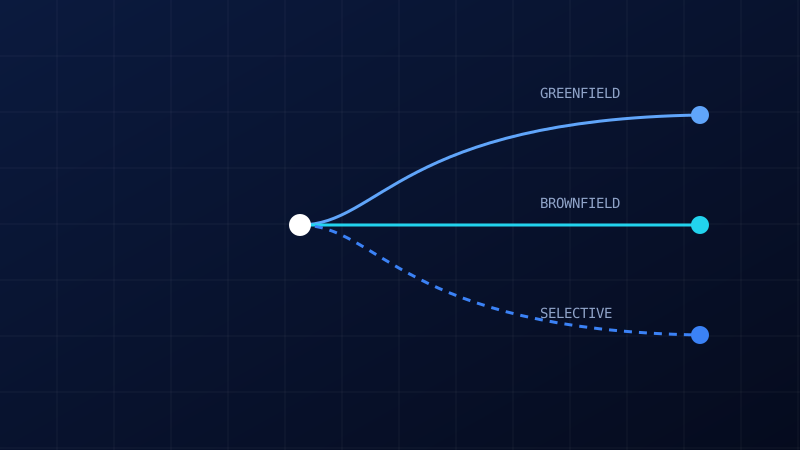
Greenfield — a new implementation, business processes redesigned, data migrated selectively. The brochure says "innovation opportunity." The reality: it's a full ERP implementation, with everything that implies — a multi-year program, heavy business involvement, and change management as the critical path. Choose it when your current configuration is the problem: decades of customisation nobody understands, processes that encode how the business worked fifteen years ago.
Brownfield — a technical conversion of your existing system. The brochure says "fastest and cheapest." The reality: usually true, and you carry every existing sin across — the custom code, the workarounds, the master-data debt. Choose it when your processes are fundamentally sound and the goal is getting off ECC before the deadline without betting the company on a redesign.
Selective data transition — the middle road: new system, but chosen histories and configurations carried over. The brochure says "best of both." The reality: the most technically demanding of the three, requiring specialist tooling and people who've done it before. Choose it when you genuinely need both a redesign and deep history — or when carve-outs and mergers make the decision for you.
The three questions that actually decide it
- Is your configuration an asset or a liability? Walk through your top twenty custom objects. If most exist because "that's how we've always done it," greenfield is calling. If most encode genuine competitive process, protect them — brownfield.
- Can your organisation absorb a redesign right now? A greenfield program consumes your best businesspeople for two years. If they're already consumed — merger, regulatory program, turnaround — a brownfield now with rationalisation later beats a greenfield that stalls.
- What does your data debt look like? Clean master data makes every route easier, but dirty data punishes brownfield least visibly and selective transition most. If you can't answer "how many real customers do we have," budget a data workstream before you budget anything else.
The most expensive route is the one your organisation can't finish. A completed brownfield beats an abandoned greenfield every time.
What we see work
The pattern with the best track record in mid-size enterprises is unfashionable: brownfield to get safely onto the platform, then a rolling clean-up — custom code retired release by release, processes redesigned one domain at a time, each with its own business case. It lacks the drama of a transformation program. It also lacks the failure rate.
Whichever route you choose
Staff the program for the route you chose, not the route you wish you'd chosen. A brownfield staffed like a light upgrade slips; a greenfield staffed without change management fails. The route decision and the team design are the same decision.